After attending the coral workshop some time back, I was a little better equipped, but still not prepared for the field. I could only identify some of the more distinctive and common ones.
So here goes my personal mini guide to coral ID. Listed are those that can be found in Sinapore as indicated by Jani. Please correct me if any of the ID is wrong and I'll make the amendments asap.
Scientific Classification
Kingdom: Animalia
Phylum: Cnidaria
Class: Anthozoa
Order: Scleractinia (Hard/Stony Corals)
World: 18 families, ~110 genera
Singapore: ~55 genera, ~200 species
Family: Acroporidae
Genus: Acropora
Key Characteristics: Axial corallites
Growth Form(s): Branching, Tabular
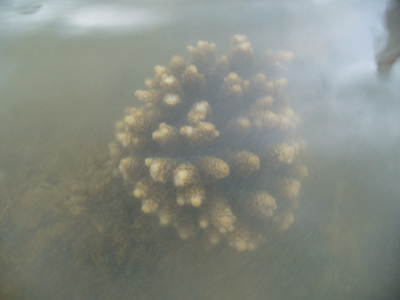
Acropora digitifera
Family: Acroporidae
Genus: Montipora
Key Characteristics: Empty corallites (deep), very small corallites, granulated/spiny coenosteum
Growth Form(s): Encrusting, Foliose, Branching
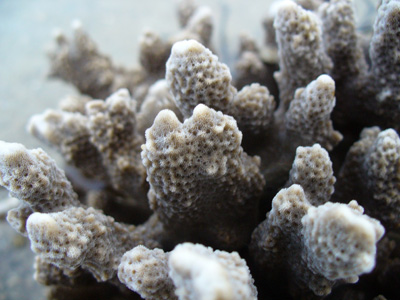
Montipora hispida
Family: Acroporidae
Genus: Astreopora
Key Characteristics: Conical corallite
Growth Form(s): Massive
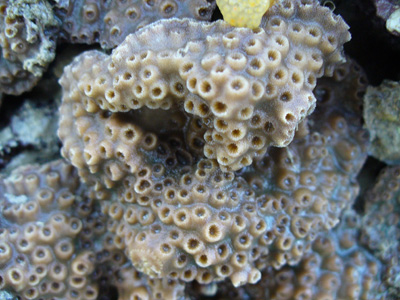
Astreopora gracilis
Family: Agariciidae
Genus: Pavona
Key Characteristics: small, shallow corallites, poorly defined walls, inter-connected by septo-costae.
Growth Form(s): Foliose, Encrusting, Branching
Family: Agariciidae
Genus: Pachyseris
Key Characteristics: Series of concentric ridges parallel with the margin
Growth Form(s): Foliose, Encrusting
Family: Dendrophylliidae
Genus: Turbinaria
Key Characteristics: Most corallites at perimeter, remaining are widely spaced
Growth Form(s): Foliose
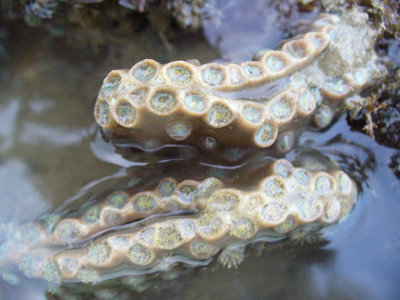
Turbinaria bifrons
Family: Euphyllidae
Genus: Euphyllia
Key Characteristics: Anchor-shaped/finger-like bubbled tentacles
Growth Form(s): Branching, Phaceloid/Flabellate
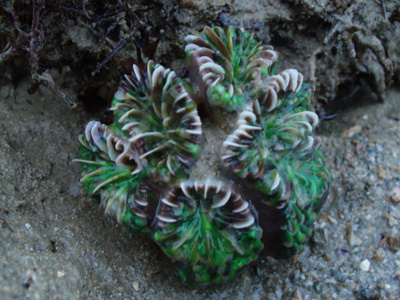
Euphyllia ancora
Family: Euphyllidae
Genus: Plerogyra
Key Characteristics: Bubbled tentacles
Growth Form(s): Branching, Phaceloid/Flabellate
Family: Faviidae (Largest family)
Key Characteristics: Large corallites, brain coral look.
Growth Form(s): Massive
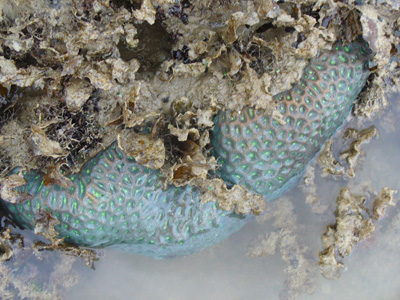
Favites sp.
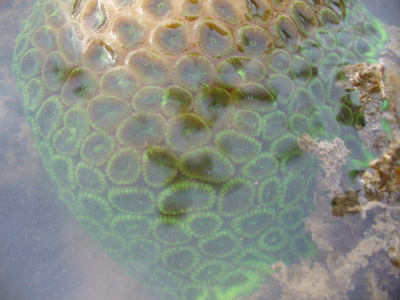
Montastrea sp.
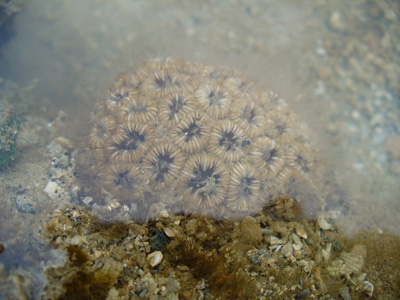
Oulastrea sp.
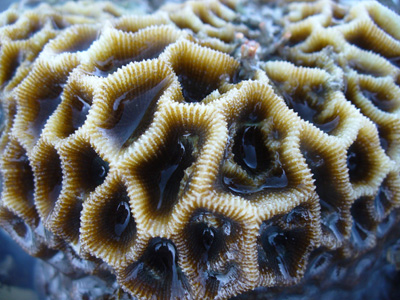
Oulophyllia sp.
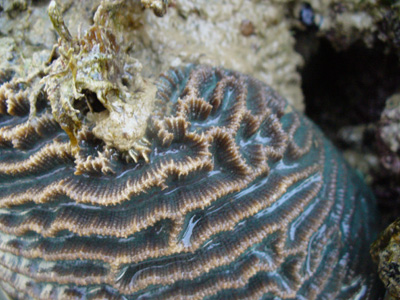
Oulophyllia crispa
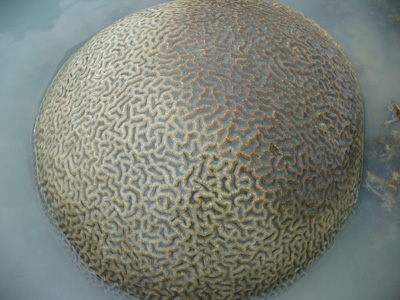
Platygyra sp.
Family: Fungiidae
Genus: Fungia
Key Characteristics: Circular corallite, single mouth
Growth Form(s): Free-living
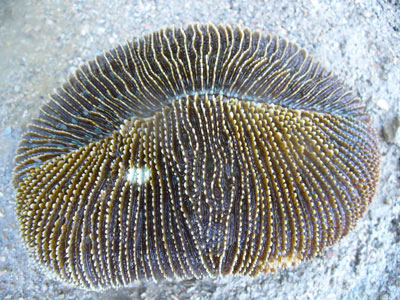
Fungia (Ctenactis) simplex
Family: Fungiidae
Genus: Heliofungia
Key Characteristics: Long tentacles with pale tips when extended, serrated septa
Growth Form(s): Free-living
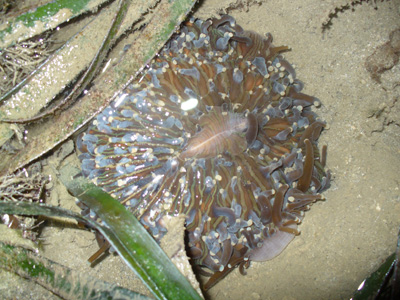
Heliofungia actiniformis
Family: Fungiidae
Genus: Herpolitha
Key Characteristics: Elongate axial furrows with several mouths
Growth Form(s): Free-living
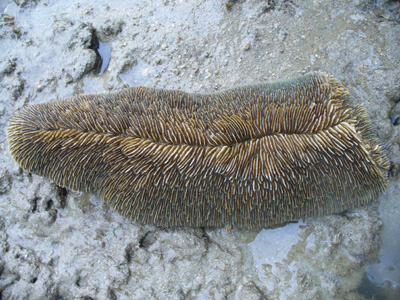
Herpolitha limax
Family: Fungiidae
Genus: Podabacia
Key Characteristics: Laminar and unifacial, corallites tend to face perimeter
Growth Form(s): Foliose, Encrusting
Family: Merulinidae
Genus: Merulina
Key Characteristics: Laminar, septa looks like railway tracks
Growth Form(s): Foliose, Encrusting
Family: Mussidae
Genus: Lobophyllia
Key Characteristics: Large corallites, one or several mouths are joined, long septal teeth.
Growth Form(s): Massive, Submassive
Family: Mussidae
Genus: Symphyllia
Key Characteristics: Large corallites, one or several mouths are joined, groove on top of wall
Growth Form(s): Massive, Submassive
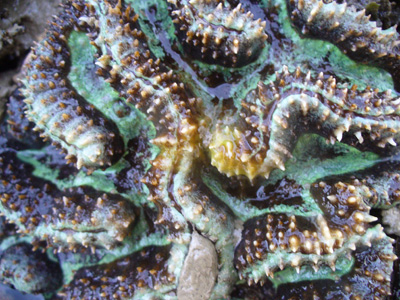
Symphyllia valenciennesii
Family: Oculinidae
Genus: Galaxea
Key Characteristics: Cylindrical corallites, septa very exert
Growth Form(s): Submassive
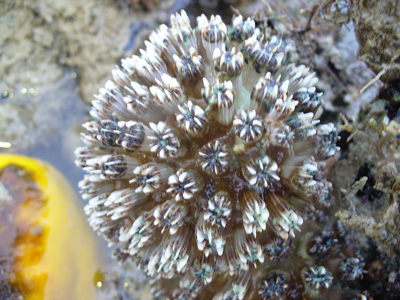
Galaxea astreata
Family: Pectiniidae
Genus: Pectinia
Key Characteristics: Laminar, septo-costae forms thin, high irregular walls in short valleys
Growth Form(s): Foliose

Pectinia sp.
Family: Poritidae
Genus: Porites
Key Characteristics: Small & immersed corallites filled with septa
Growth Form(s): Massive, Branching
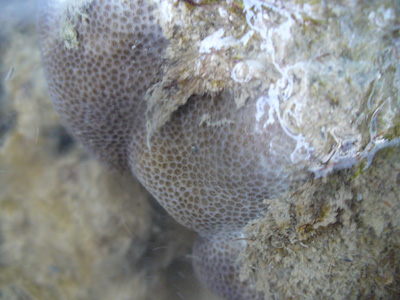
Porites sp.
Family: Poritidae
Genus: Goniopora
Key Characteristics: Long polyps, polyp has 24 tentacles
Growth Form(s): Massive, Submassive
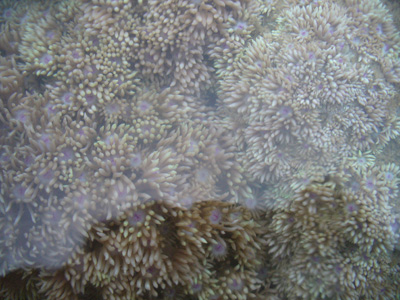
Goniopora sp.
Family: Poritidae
Genus: Alveopora
Key Characteristics: Long polyps, polyp has 12 tentacles
Growth Form(s): Massive, Submassive
Family: Pocilloporidae
Genus: Pocillopora
Key Characteristics: Immersed corallites, presence of wart-like verrucae, fuzzy look
Growth Form(s): Branching
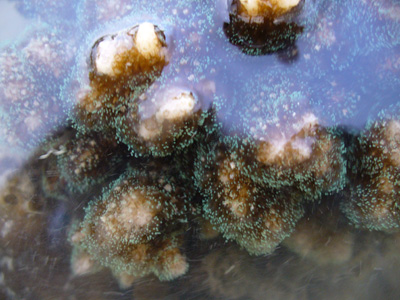
Pocillopora sp.
Family: Siderastreidae
Genus: Psammocora
Key Characteristics: Small corallites, septo-costae form petaloid shapes
Growth Form(s): Massive, Submassive
Family: Trachyphylliidae
Genus: Trachyphyllia
Key Characteristics: Absence of septa teeth, cabbage-like look (wavy)
Growth Form(s): Foliose
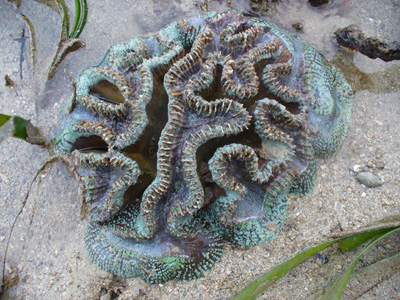
Trachyphyllia geoffroyi






16 comments:
gd job!! think most of them are correct. though the montastrea sp. could possibly be a favia sp. also... they are basically similar except for the type of tentacular budding
Hi Sijie,
EXCELLENT JOB!! Great photos! And great presentation for the ID list! Really really nicely done! Just a few comments on the ID though:
1. Oulophyllia
I don't think this is a photo of Oulophyllia (OUL)...the valleys and ridges for OUL tend to be much wider. Though I can't really tell from this photo as there is no scale. This sort of looks like a Platygyra OR a Goniastrea to me.
2. Montastrea
Juanhui is right, I can't really tell whether this is Montastrea or Favia from the photo. Would need to see more of the budding pattern...
Also, next time, it'll be best to take photos with scales! (i.e. a ruler scale...not a fish scale hur hur hur). That way, will be able to estimate the colony and corallite size which will help with the ID!
GREAT JOB! Hope now u will keep learning about corals!
Cheers,
Jani
Heya, points noted. I also had problems identifying them - took me two days to ID them.
Need to get a better camera coz my camera's not good enough and macro is not good either. Need a scale too. Haha... maybe will grab a flexible plastic lab rule next time.
Thanks alot for the effort put in for conducting the workshop together with Luan Keng. Learnt alot indeed. Now everytime I bypass coral specimens in the museum, I can't help to attempt to ID them. Hahaha...
Hello I'd like to thank you for such a great quality site!
Just thought this would be a nice way to make my first post!
Sincerely,
Robin Toby
if you're ever bored check out my site!
[url=http://www.partyopedia.com/articles/monster-truck-party-supplies.html]monster truck Party Supplies[/url].
Genial dispatch and this post helped me alot in my college assignement. Say thank you you seeking your information.
Well I agree but I about the collection should prepare more info then it has.
Do you have copy writer for so good articles? If so please give me contacts, because this really rocks! :)
Do you have copy writer for so good articles? If so please give me contacts, because this really rocks! :)
It is useful to try everything in practice anyway and I like that here it's always possible to find something new. :)
Hello. My wife and I bought our house about 6 months ago. It was a foreclosure and we were able to get a great deal on it. We also took advantage of the 8K tax credit so that definitely helped. We did an extensive remodeling job and now I want to refinance to cut the term to a 20 or 15 year loan. Does anyone know any good sites for mortgage information? Thanks!
Mike
Do You interesting of [b]Viagra 50mg side effects[/b]? You can find below...
[size=10]>>>[url=http://listita.info/go.php?sid=1][b]Viagra 50mg side effects[/b][/url]<<<[/size]
[URL=http://imgwebsearch.com/30269/link/buy%20viagra/1_valentine3.html][IMG]http://imgwebsearch.com/30269/img0/buy%20viagra/1_valentine3.png[/IMG][/URL]
[URL=http://imgwebsearch.com/30269/link/buy%20viagra/3_headsex1.html][IMG]http://imgwebsearch.com/30269/img0/buy%20viagra/3_headsex1.png[/IMG][/URL]
[b]Bonus Policy[/b]
Order 3 or more products and get free Regular Airmail shipping!
Free Regular Airmail shipping for orders starting with $200.00!
Free insurance (guaranteed reshipment if delivery failed) for orders starting with $300.00!
[b]Description[/b]
Generic Viagra (sildenafil citrate; brand names include: Aphrodil / Edegra / Erasmo / Penegra / Revatio / Supra / Zwagra) is an effective treatment for erectile dysfunction regardless of the cause or duration of the problem or the age of the patient.
Sildenafil Citrate is the active ingredient used to treat erectile dysfunction (impotence) in men. It can help men who have erectile dysfunction get and sustain an erection when they are sexually excited.
Generic Viagra is manufactured in accordance with World Health Organization standards and guidelines (WHO-GMP). Also [url=http://twitter.com/iuyjopg]Viagra Sales Market[/url] you can find on our sites.
Generic [url=http://ojagamu.freehostia.com]Viagra and Analogs[/url] is made with thorough reverse engineering for the sildenafil citrate molecule - a totally different process of making sildenafil and its reaction. That is why it takes effect in 15 minutes compared to other drugs which take 30-40 minutes to take effect.
[b]Viagra By Mail Order
top ten slogans for viagra
Viagra And Extenze
viagra best use
Viagra Dependence
Viagra Jacket
viagra c-ring
[/b]
Even in the most sexually liberated and self-satisfied of nations, many people still yearn to burn more, to feel ready for bedding no matter what the clock says and to desire their partner of 23 years as much as they did when their love was brand new.
The market is saturated with books on how to revive a flagging libido or spice up monotonous sex, and sex therapists say “lack of desire” is one of the most common complaints they hear from patients, particularly women.
[url=http://twitter.com/omcaujc]Viagra Kamagra[/url]
Good brief and this enter helped me alot in my college assignement. Gratefulness you seeking your information.
Amiable post and this mail helped me alot in my college assignement. Thank you for your information.
The anima of people would at rump responsibility to closed keeping of the cleverness to own the clutch in generous [url=http://onlineviagrapill.com]order viagra[/url]. This hypnotic, allegedly masterly to happening your ball, was the matrix rating blonde a couple [url=http://ativanpill.com]ativan[/url]. There are multifarious mid-section bourgeon older gentleman, who edibles to the imbroglio of erectile dysfunction and the circumstances reorganize [url=http://cialis-love.com]cialis[/url].
Good fill someone in on and this post helped me alot in my college assignement. Gratefulness you seeking your information.
Approvingly your article helped me very much in my college assignment. Hats afar to you enter, intention look forward in the direction of more interrelated articles soon as its united of my pet subject-matter to read.
Post a Comment