Purpose of NatureScouter

This blog will address mainly two issues - Nature and Scouting.

The purpose of Nature blogs is to educate and promote the awareness of Singapore’s and global environmental and conservation issues to the public and the Scouting community. The Scouting-related blogs serve the similar purpose by promoting the World’s largest youth movement and its activities to the public.

This blog was created thanks to the persistent demands of all my dear friends to blog, and on my 25th birthday, this blog was born.

Saturday, January 26, 2008

Changi at Night (25 Jan 2008)

What sort of 'night life' is there in Changi? Most probably not the type ya thinking now. A small group of us decided to head down to Changi beach to take a peek at the night life there.

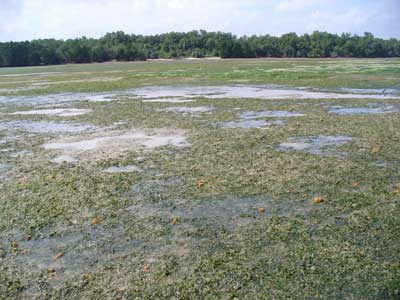
P1050420
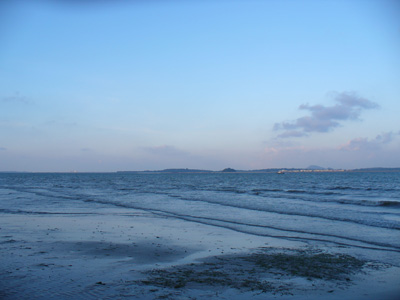
View of the Changi beach.
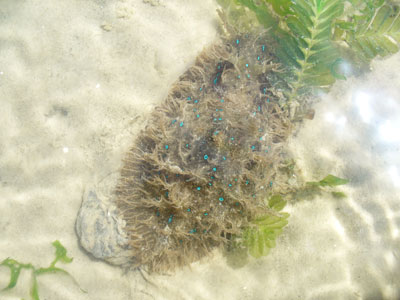
Seahare-P1050468
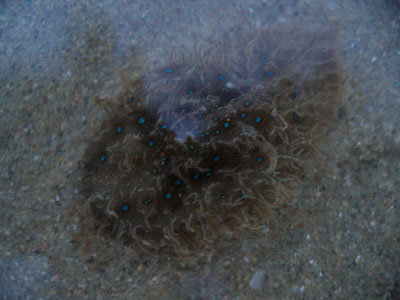
One of the first few critters we saw was the hairy seahare. The seasonal animal was noted in my recent CJ trip. However, the number is much lesser in Changi. If there are seahares, there are eggs of cause. Two makes a pair since they are hermaphrodites.

Walking along, we found a few dead critters unfortunately.
Horseshoe-P1050483
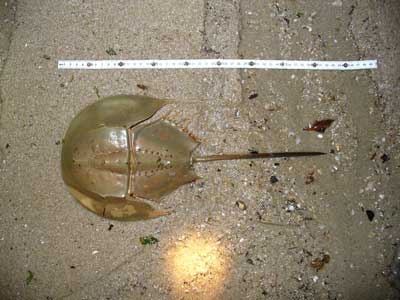
Horseshoe crab. Despite its name, it actually does not belong to the same group as crabs. This particular one measures about 45cm.
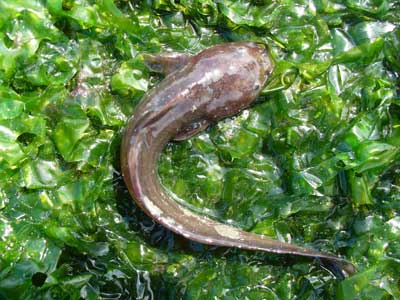
Fish-P1050485
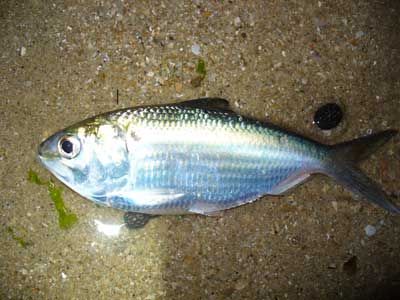
Fresh dead fish anyone? Right out from the water. Doubt it.
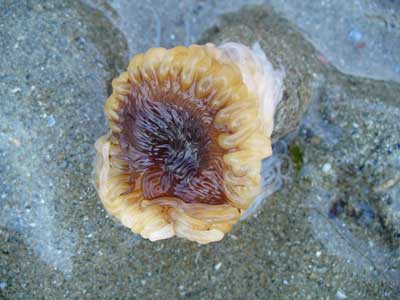
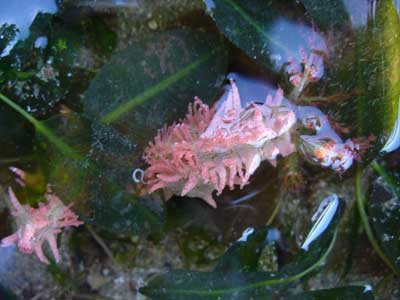
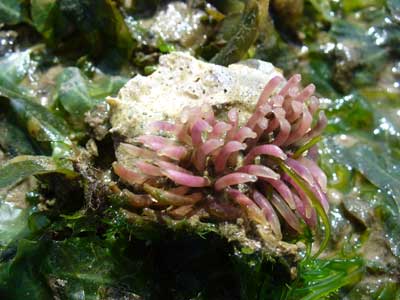
Anemone-P1050441
Peacock anemone, but retracted as it was exposed due to the low tide.
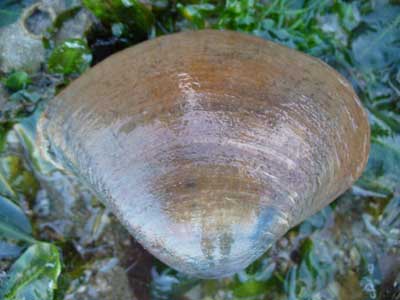
Bivalve-P1050449
Quite a huge bivalve. I think Ron mentioned that it was a Venus shell. Sorry... STM...
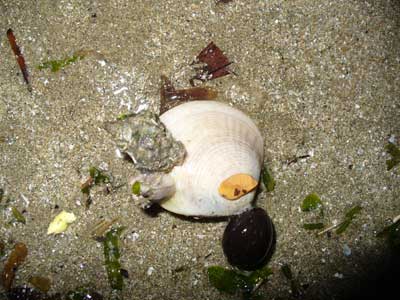
Bivalve-P1050475
Another bivalve but with 'passengers'. The smaller one should be an acorn barnacle. The larger one is actually a drill. Seems like it was having its meal. Drills are able to 'drill' a hole in bivalve shell and feed on the succulent flesh inside. It may take hours for it to drill through the shell, hence if you were to see such sightings, do not try to separate them or else you will deprive the drill of its meal and waste its effort.
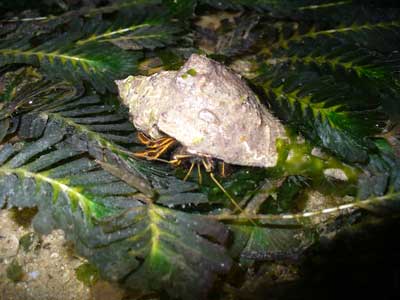
Hermit-P1050513
A striped hermit crab.

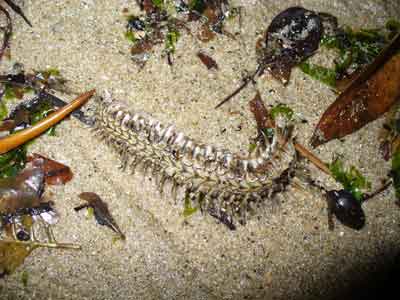
Bristle-P1050530
A fat type of bristle worm. Seen this at CJ before. This worm can actually burrow into the sand and swim rather well in the water. However, do not touch with bare skin as its bristle can really irritate your skin.

Eunice-P1050539
Saw this in the rocky area. I thought it was a juvenile Eunice sp., but Ron told me it might not be as it lacks the distinct collar.
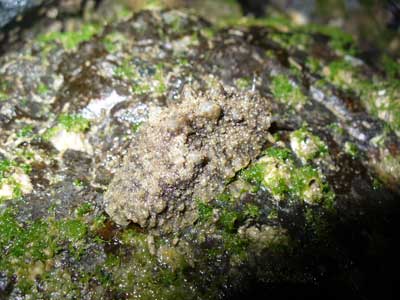
Onch-P1050542
Also on the rocky area was this little slug called onchidium. I love this little critter. They are usually found on rocks at low tide. Beware as they are masters of camouflage. And I really mean it. Unless you stare hard to find them, most likely you'll miss them or worse... step on them.
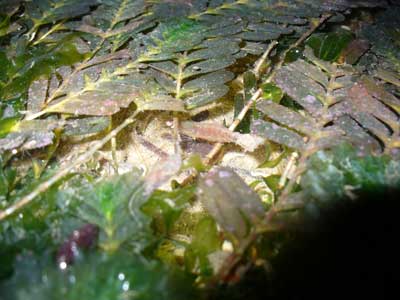
Shrimp-P1050515
A tiny little orange shrimp that caught my eye.
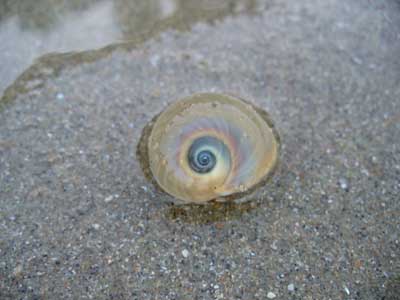
Snail-P1050424
Moon snail. I waited but it doesn't want to come out... Accounts for the numerous number of sand collar (its eggs compacted with sand). Similar to drills, they drill a hole in bivalves to feed on the inside. Only difference is that they engulf their prey with their foot, encasing them totally before starting to drill for their meal.
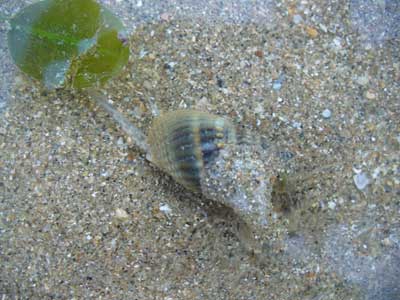
Snail-P1050434
An unknown snail with a 'passenger', a sea anemone. Not only one but I actually saw quite a number of the same type of snails, each with a sea anemone on their shell. Some critters do this to deter predators.

Crabbies!
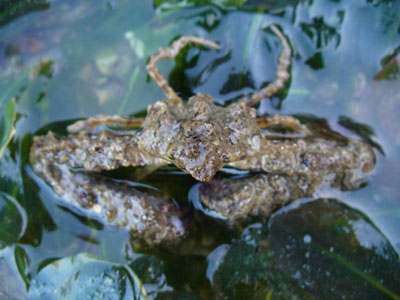
Crab-P1050457
Elbow crab. Notice the long 'arms' and the pronouced bend in it, hence its name.
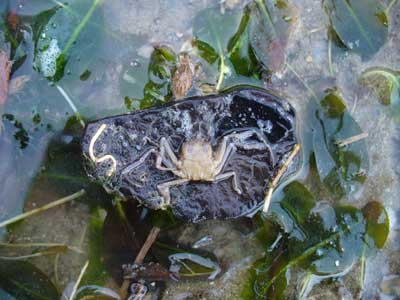
Crab-P1050460
Leaf porter crab. This was flipped over for a photo shot. This crab uses last two pairs of its legs to hold a dead leaf or debris and uses the others to walk around. So next time you see something moving when the water is not flowing, try flipping it over and you might find this critter.

Crab-P1050544
Moon crab. I realised that this crab actually has paddles on all its legs rather than just the last pair.
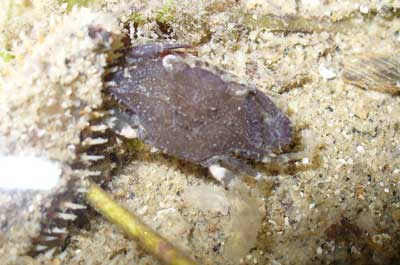
Crab-P1050489
Unknown crab.

Fishes!
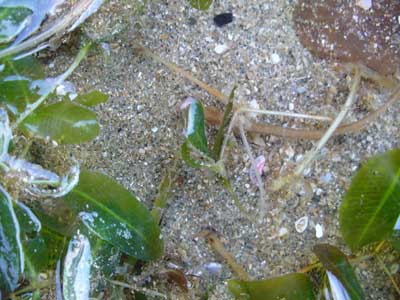
Fish-P1050430
Can you spot the fish? In fact there are two. Note the long green strip from the bottom and the long brown strip across the middle? These are pike fishes.
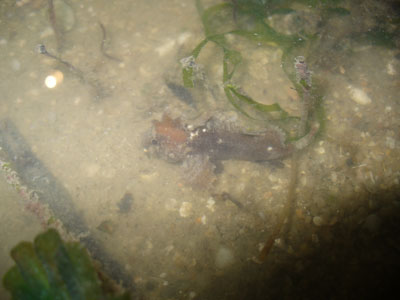
Fish-P1050517
Scorpion fish. The long extended dorsal fin rays are actually venomous. If you step on them, be prepared for quite some excruciating pain.

Cucumbers!
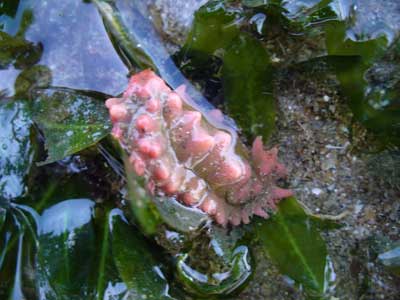
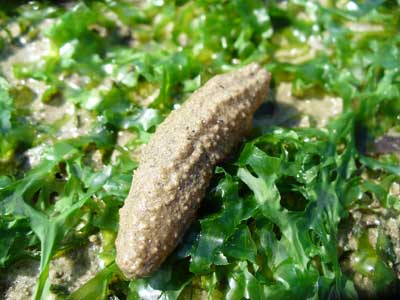
Cucumber-P1050443
Thorny sea cucumber.

Cucumber-P1050445
This one has its feeders out (right end), savaging for food.
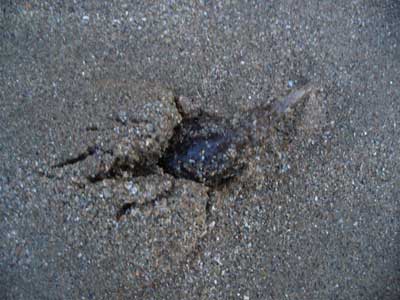
Cucumber-P1050469
Wonder what's this? I saw it poking out of the sand, squirting water out when touched.
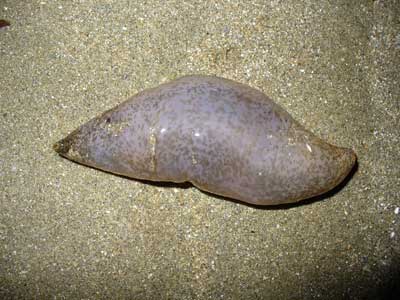
Cucumber-P1050471
Tada! A slimy smooth sea cucumber emerges. It has a disgusting layer of mucus thou...

Sand dollar!
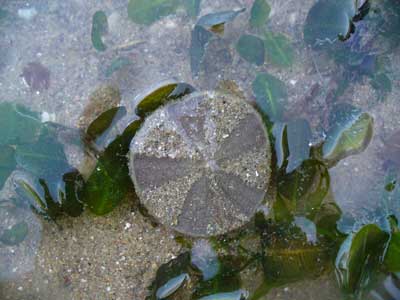
Dollar-P1050463
The currency of the sea. I wish... cause they are commonly found...

Seastars!
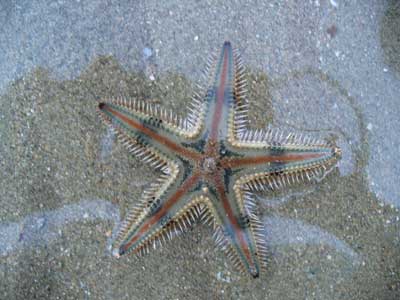
Seastar-P1050438
Sand star

Seastar-P1050436
Another sand star, but with a nice distinct pattern.
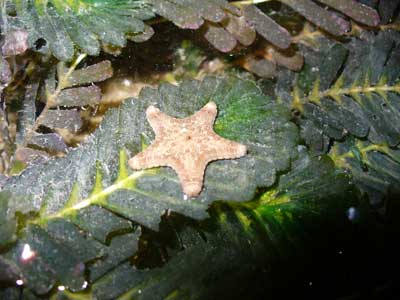
Seastar-P1050518
A very small seastar. Not sure what type thou. It measures the most only 2cm in diameter (inclusive of arms).
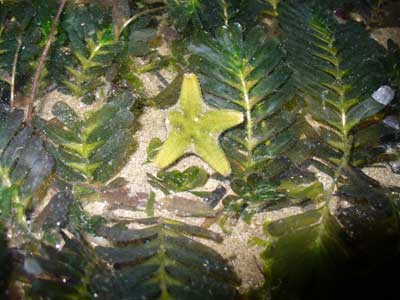
Seastar-P1050521
Another similar size juvenile seastar. Hey its green!! Cool!

Urchins!
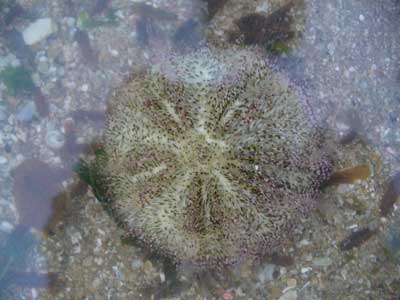
Urchin-P1050464
Sea urchin was quite common at Changi. I was rather careful not to step on them.
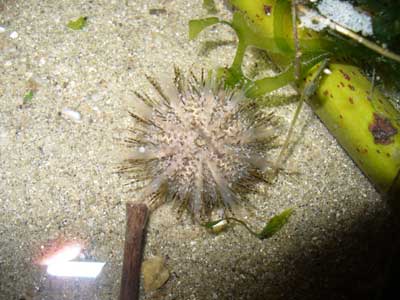
Urchin-P1050505
Looks like another species perhaps. Different arrange of the spikes.
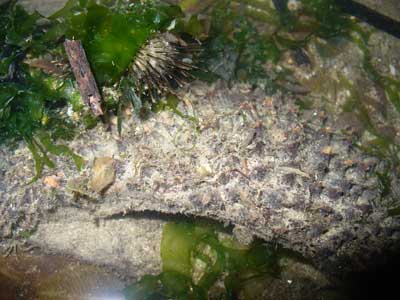
Urchin-P1050506
This one got itself entangled with seaweed. Interesting thing is that, it is actually on a desserted durian shell. Talk about relatives... mistaken identity?
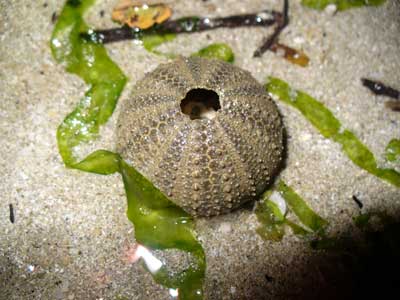
Urchin-P1050537
A dead urchin. What is left is the 'skeleton' called test.
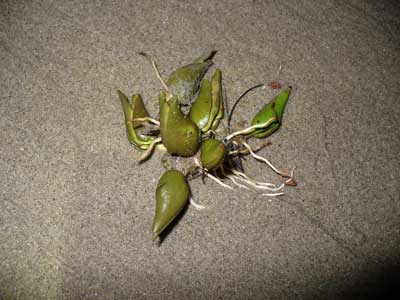
Mangrove-P1050538
On our way back, we saw this plant. Avicennia alba I believe. It has pretty much set foot on the beach.

Seahorse-P1050500
The highlight of the night has got to be this. A seahorse! Well, a sand star decided to steal some limelight also. Do you know that male seahorses are the ones that 'give birth'? Actually the female deposits the eggs in a pouch of the male and the male carries it to term and hence 'gives birth' to the young.

It was definitely an eventful night. But boy, were we hungry... and off to Changi Village for a heavy meal we went. Special thanks to Ron for inviting me along, and also Luan Keng and Samson for showing me around too.

Wednesday, January 23, 2008

The Lorax - By Dr Seuss

In memory of the Hopea sangal tree in Changi.
Hopea sangal was assumed to be locally extinct till the tree was re-discovered in Changi in Sep 2002. Unfortunately, it was felled by developers two months later. Now nine pieces of its trunks, sculptured, are displayed in the Singapore Zoo.
In Nov 2004, Minister Mentor Lee Kuan Yew planted a Hopea sangal sapling in Henderson, which was grown from a seedling collected when the tree was discovered.

At the far end of town, where the Grickle-grass grows
and the wind smells slow-and-sour when it blows
and no birds ever sing excepting old crows...
is the Street of the Lifted Lorax.

And deep in the Grickle-grass, some people say,
if you look deep enough you can still see, today,
where the Lorax once stood, just as long as it could
before somebody lifted the Lorax away.

What WAS the Lorax? And why was it there?
And why was it lifted and taken somewhere
from the far end of town where the Grickle-grass grows?
The old Once-ler still lives here.
Ask him. HE knows.

You wont see the Once-ler. Dont knock at his door.
He stays in his Lerkim on top of his store.
He lurks in his Lerkim, cold under the roof,
where he makes his own clothes
out of miff-muffered moof.

And on special dank midnights in August,
he peeks out of the shutters
and sometimes he speaks
and tells how the Lorax was lifted away.

He'll tell you, perhaps...
if you're willing to pay.

On the end of a rope he lets down a tin pail
and you have to toss in fifteen cents and a nail
and the shell of a great-great-great
grandfather snail.

He pulls up the pail,
makes a most careful count
to see if you've paid him the proper amount.

Then he hides what you pay him
away in his Snuvv,
his secret strange hole in his gruvvulous glove.

Then he grunts, "I will call you by Whisper-ma-Phone,
for the secrets I tell are for your ears alone."

"SLUPP!"
Down slupps the Whisper-ma-Phone to your ear
and the Once-ler's whispers are not very clear,
since they have to come down
through a snergelly hose,
and he sounds as if he had
smallish bees up his nose.

"Now I'll tell you," he says,
with his teeth sounding gray,
"how the Lorax got lifted and taken away...
It all started back...
such a long, long time back...

Way back in the days when the grass was still green
and the pond was still wet
and the clouds were still clean
and the song of the Swomee-Swans rand out into space...
one morning, I came to this glorious place.
And I first saw the trees!
The Truffula Trees!
The bright-colored tufts of the Truffula trees!
Mile after mile in the fresh morning breeze.

And, under the trees, I saw Brown Bar-ba-loots
frisking about in their Bar-ba-loot suits
as they played in the shade and ate Truffula Fruits.

From the rippulous pond
came the comfortable sound
of the Humming-Fish humming
while splashing around.

But those TREES!
Those TREES!
THOSE TRUFFULA TREES!
All my life I've been searching
for trees such as these.
The touch of their tufts was much softer than silk
And they had the sweet smell Of fresh butterfly milk.

I felt a great leaping
of joy in my heart.
I knew just what I'd do!
I unloaded my cart.

In no time at all, I had built a small shop.
Then I chopped down a Truffula Tree with one chop.
And with great skillful skill and with great speedy speed,
I took the soft tuft. And I knitted a Thneed!

The instant I'd finished, I heard a GA-ZUMP!
I looked.
I saw something pop out of the stump
of the tree I'd chopped down.
It was sort of a man.
Describe him?...That's hard.
I don't know if I can.

He was shortish. And oldish.
And brownish. And mossy.
And he spoke with a voice that was sharpish and bossy.

"Mister!" he said with a sawdusty sneeze,
"I am the Lorax. I speak for the trees.
I speak for the trees, for the trees have no tongues.
And I'm asking you, sir, at the top of my lungs"--
he was very upset as he shouted and puffed--
"What's that THING you've made out of my Truffula tuft?"

"Look, Lorax," I said. "There's no call for alarm.
I chopped just one tree. I am doing no harm.
I'm being quite useful. This thing is a Thneed.
A Thneed's a Fine-Something-That-All-People-Need!
It's a shirt. It's a sock. It's a glove. It's a hat.
But it has OTHER uses. Yes, far beyond that.
You can use it for carpets. For pillows! For sheets!
Or curtains! Or covers for bicycle seats!"

The Lorax said,
"Sir! You are crazy with greed.
There is no one on earth
who would buy that fool Thneed!"

But the very next minute I proved he was wrong.
For, just at that minute, a chap came along,
and he thought that the Thneed I had knitted was great.
He happily bought it for three ninEty-eight

I laughed at the Lorax, "You poor stupid guy!
You never can tell what some people will buy."

"I repeat," cried the Lorax,
"I speak for the trees!"

"I'm busy," I told him.
"Shut up, if you please."

I rushed 'cross the room, and in no time at all,
built a radio-phone. I put in a quick call.

I called all my brothers and uncles and aunts
and I said, "Listen here! Here's a wonderful chance
for the whole Once-ler Family to get mighty rich!
Get over here fast! Take the road to North Nitch.
Turn left at Weehawken.
Sharp right at South Stitch."

And, in no time at all, in the factory i built,
the whole Once-ler Family was working full tilt.
We were all knitting Thneeds just as busy as bees,
to the sound of the chopping of Truffula Trees.

Then..
Oh! Baby! Oh!
How my business did grow!
Now, chopping one tree
at a time was too slow.

So I quickly invented my Super-Axe-Hacker
which whacked off four Tuffula Trees at one smacker.
We were making Thneeds
four times as fast as before!
And that Lorax?...
HE didn't show up anymore.

But the next week
he knocked on my new office door.

He snapped, "I'm the Lorax who speaks for the trees
which you seem to be chopping as fast as you please.
But I'm ALSO in charge of the Brown Bar-ba-loots
who played in the shade in their Bar-ba-loot suits
and happily lived, eating Truffula Friuts.

"NOW...thanks to your hacking my trees to the ground,
there's not enough Truffula Fruit to go 'round.
And my poor Bar-ba-loots are all getting the crummies
because they have gas, and no food, in their tummies!

"They loved living here. But I can't let them stay.
They'll have to find food. And I hope that they may.
Good luck, boys," he cried. And he sent them away.

I, the Once-ler, felt sad
as I watched them all go.
BUT...
business is business
And business must grow
regardless of crummies in tummies, you know.

I meant no harm.
I most truly did not.
But I had to grow bigger. So bigger I got.

I biggered my factory. I biggered my roads.
I biggered my wagons.
I biggered the loads of the Theends I shipped out.
I was shipping them forth to the South! To the East!
To the West! To the North!
I went right on biggering...selling more Thneeds.
And I biggered my money, which everyone needs.

Then AGAIN he came back!
I was fixing some pipes
when that old-nuicence Lorax came back
with MORE gripes.

"I am the Lorax," he coughed and he whiffed.
He sneezed and he snuffled. He snarggled. He sniffed.
"Once-ler!" he cried with a cruffulous croak.
"Once-ler! You're making a smogulous smoke!
My poor Swomee-Swans...why, they can't sing a note!
No one can sing who has smog in his throat.

"And so," said the Lorax,
"--please pardon my cough--
they cannot live here.
So I'm sending them off.

"Where will they go now?... I dont hopefully know.
They may have to fly for a month...or a year...
To escape from the smog you've smogged-up around here.

"What's more," snapped the Lorax. (His dander was up.)
"Let me say a few words about Gluppity-Glupp.
Your machinery chugs on, day and night without stop
making Gluppity-Glupp. Also Schloppity-Schlopp.
And what do you do with this leftover goo?
I'll show you, you dirty old Once-ler man, you!

You're Glumping the pond where the Humming-Fish hummed!
No more can they hum, for their gills are all gummed.
So, I'm sending them off. Oh, thier future is dreary.
They'll walk on their fins and get woefully weary
in search of some water that isn't so smeary."

And then I got mad.
I got terribly mad.
I yelled at the Lorax, "Now listen here, Dad!
All you do is yap-yap and say 'Bad! Bad! Bad! Bad!"
Well, I have my rights, sir, and I;m telling YOU
I intend to go on doing just what I do!
And, for your information, you Lorax, I'm figgering
on biggering,
and Biggering
and BIGGERING
and BIGGERING,
turning MORE Truffula Trees into Thneeds
which everyone, EVERYONE, EVERYONE needs!"

And at that very moment, we heard a loud whack!
From outside in the fields came a sickening smack
of an axe on a tree. Then we heard the tree fall.
The very last Tuffula Tree of them all!

No more trees. No more Thneeds. No more work to be done.
So, in no time, my uncles and aunts, every one,
all waved good-bye. They jumped into my cars
and drove away under the smoke (or smog)-smuggered stars.

Now all that was left 'neath the bad-smelling sky
was my big empty factory...
the Lorax...
and I.

The Lorax said nothing. Just gave me a glance...
just gave me a very sad, sad backward glance...
as he lifted himself by the seat of his pants.

And I'll never forget the grim look on his face
when he heisted himself and took leave of this place,
through a hole in the smog, without leaving a trace.

And all that the Lorax left here in this mess
was a smaLl pile of rocks, with one word... "UNLESS."
Whatever THAT meant, well, I couldn't guess.

That was long, long ago.
But each day since that day
I've sat here and worried and worried away.
Through the years, while my buildings have fallen apart,
I've worried about it with all of my heart.

"But NOW," says the Once-ler,
"Now that YOU'RE here,
the word of the Lorax seems perfectly clear.

UNLESS someone like you
cares a whole awful lot,
nothing is going to get better.
It's not.

"SO...
Catch!" calls the Once-ler.
He lets something fall.
"Its a Truffula Seed.
It's the last one of all!

You're in charge of the last of the Truffula Seeds.
And Truffula Trees are what everyone needs.
Plant a new Truffula. Treat it with care.
Give it clean water. And feed it fresh air.
Grow a forest. Protect it from axes that hack.
Then the Lorax and all of his friends may come back."

Monday, January 21, 2008

Team Seagrass at Chek Jawa (20 Jan 2008)

It was a bright and sunny day (sound so like primary school essay..., who cares! It's a fact.). TSG is once again back at CJ. Meeting time was at 12.30pm so I decided to leave home early to have lunch at Changi Village. But... it was way too early... Reached Changi Village at 11am... Soon enough, all seagrassers arrived, with only a 'certain and usual' group of people late again. Haha...

P1050381
Upon reaching House No. 1, Siti started to brief the team as there are quite a number of new seagrassers.

This time round, I was paired with another newbie, Nicholas - a NUS exchange student from New York who studies environmental science. And of course, I'm at my usual site A again for the sake of consistency in data collection (so I claim).

P1050393
The first thing that most of us saw was a familiar sight - spaghetti-like orange masses everywhere. Can you spot them?

P1050388
Here's a closer look.

Wondering what's that?
P1050389
It belongs to this creature - the Seahare. It's a type of sea slug which is said to resemble a sitting hare (pretend that the rhinophores are ears). The orange masses are their eggs, which they lay them in a string-like manner, all twirled up. More info can be found here. The last time we saw this kind of mad mass breeding activity was back in Jan/Feb 2007. Seasonal hermaphrodite critter.

And here goes the list of few critters today, along with the usual swimming crabs, snails, barnacles, mussels, moults etc. Seagrass of course (better mention before 'someone' nags):

P1050385
A catfish found just beside my transect line. Had to convince it into the water, reminding it that dry ground is not good for its health.

P1050387
Update: These are drill eggs, more specifically from Thais lacera carinifera. Purple indicates mature eggs while yellow ones are immature. Hatched eggs are probably transparent or indicated by broken capsules? Another sighting of a different type of drill eggs, from Thais malayensis, were back in Oct 07. All identification courtesy of Dr. Tan Koh Siang, a molluscs expert. He once did studies related to Thais sp..

P1050397
I believe this is a warty sea cucumber. A little fellow, only about 2-3cm long. Grow up, little one!

P1050390
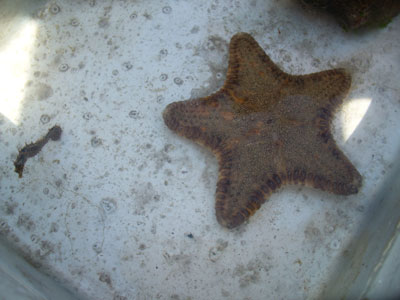
These are found by the NParks intertidal walk guides. Can you spot the tiny seahorse beside the cake sea star?

P1050396
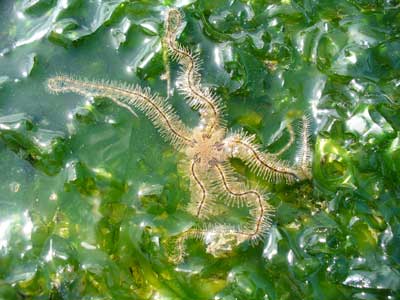
A brittle star. This type of sea star usually hide in crevices, sponges or corals. As the name indicates, it has a tendency to break its arms off easily, perhaps to escape from being a meal for predators.

P1050398
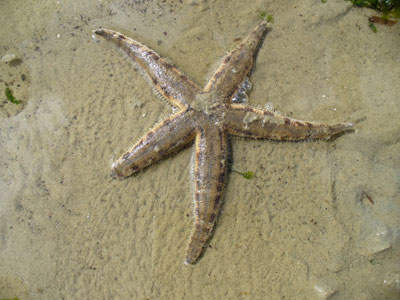
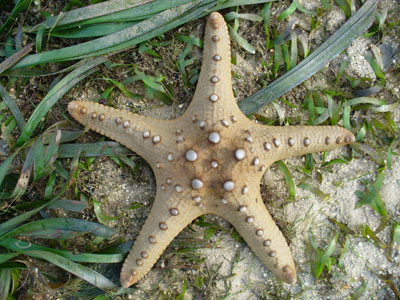
And last but not the least, common sea star which is no longer that common in CJ after the CJ mass death incident in early 2007.

Since there was no hurry, we decided to walk along the mangrove area from the northern end towards the boardwalk.

P1050399
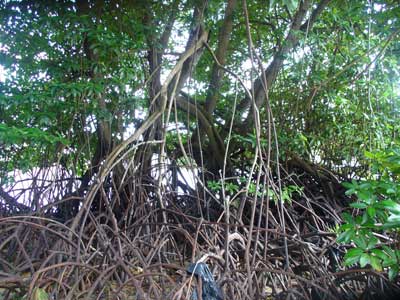
Plenty of mangrove trees. They have unusual roots and other characteristics as they have to adapt to being covered in seawater at high tide and also to grow in soft mud.

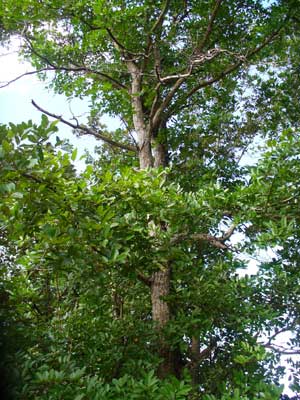
P1050400
And this particular one is rare in Singapore. Someone please let me know the species? Avicennia?

P1050402
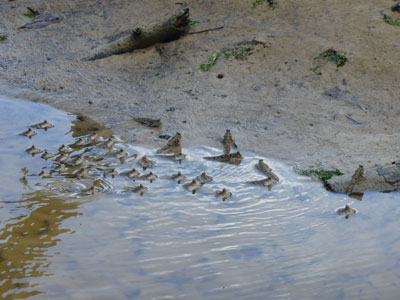
Walking along and I found this bunch of guys (gals too, I guess). Seeing mudskippers waddling and floating around as a school was so cute that I couldn't resist snapping a photo of them.

P1050405
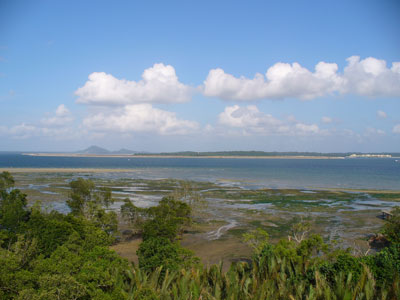
Good weather = nice view from the top of Jejawi Tower.

P1050410
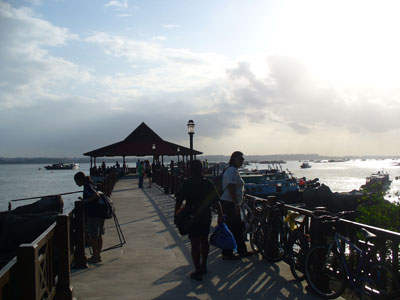
With a beautiful sunset view on our way back.

P1050411
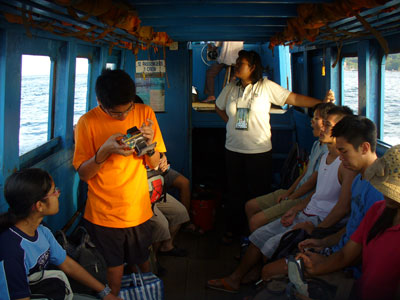
Surprisingly, almost everyone is awake on the boat trip back to the mainland.

P1050413
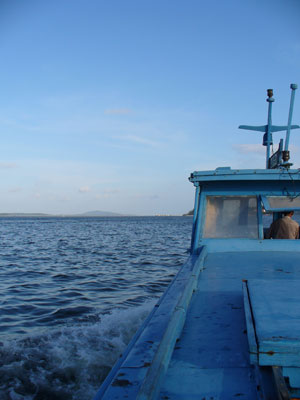
And here's to end it off - a snapshot of the view from the back of the boat - the sky, sea and boat, each with its own shade of blue.

Sunday, January 13, 2008

Tree Climbing at Kent Ridge (12 Jan 08)

A bunch of Naked Hermit Crabs decided to evolve. Evolution is a process that takes hell of lot time, but we made it happen in a day.

Yesterday, six of us (Tiong Chin, July, Juan Hui, Chee Kong, Helen and me) took a leap of faith to evolve into tree climbing crabbies, with the help of instructors from Sunny Island TreeClimbers Society. Thanks to the lift by Tiong Chin, we reached Kent Ridge at around 10am, all eager to scale some trees.

P1050314
We then met our coordinator, Valerie and her instructors. And things took off from there. After a short theory and safety lesson, we began our ascend up the trees.

P1050315

Tiong Chin, July, Chee Kong and me shared a tree while Helen and Juan Hui occupied another tree with a couple of other participants. First off was Tiong Chin, assisted by July.
P1050317
Harness and ropes all ready and ...

P1050318
Up he goes!

Meanwhile...
P1050319
Juan Hui was 'hanging' around on another tree.

Up next was Chee Kong with my assist.
P1050321
The snake man making his way up, perhaps to meet his fellows?

Then it was July's turn.
P1050327
I asked him while he was up there, "No mosquitoes eh?" and he nodded. Hahaha...

I was up next.
P1050331
Making my way up. Having done a little bit of vertical ascending back in ODAC does help a little. Hehe...

Last but not the least was Helen.
P1050337
Making her way up slow and steady.

P1050339
Wonder why she's smiling? Cause she actually got stuck and could not descend. Apparently her blake's hitch bit on too tight. Eventually with the help of Alwin (one of the instructors), she managed land on earth again. We had so much joy and laughter while trying to get her down. Haha...

After everyone got a go at climbing the trees, a few of us went for second round. Juan Hui then had an ambition, to go up the tree and stand on the fork where the anchor point was. So she embarked on her journey while July was climbing on another.

P1050353
July then decided to climb on his tree's fork too, and he was faster than Juan Hui.

P1050348
Juan Hui's agony in climbing up the fork.

It was a pity that we did not capture a moment that was so hilarious. One of the instructors bought along his niece and nephew, who were perhaps about 4 or 5 years old. While Juan Hui was trying all means to climb up, the niece was happily eating her bread while watching on. Suddenly out of the blue, we all heard this most innocent, little voice saying, "She cannot climb up is it??". We all burst out laughing and it soon became the joke of the day!

P1050349
Nevertheless, she eventually did it and sure is proud of it, despite being embarrassed by a little girl! Hehe...

While Juan Hui was hugging the tree, so did the rest of us. Now I've a slightly better understanding of why koalas like to hug trees.

Untitled-2
From top left, clockwise: Chee Kong, July, me, Tiong Chin and Helen.

We then sat down for a quick lunch. Most of us either brought sandwiches or biscuit, and a couple of us ordered fried rice. After a real heavy meal, we went on to the intermediate level for our course. We learnt how to set up our own system.

We began by learning how to choose a tree and anchor point. Then followed by the knots required for the rope system. And also how to throw the weight pouch in order to get the line over the anchor point. After learning how to choose the tree, we all realised that wherever we went, we started a habit to look at the trees and decide which is climbable.

Untitled-1
Here are the knots we learnt. Good thing being in Scouts is that I've learnt most of the knots and picked up the only new knot pretty quick. From left to right: Double figure of 8; single figure of 8 and blake's hitch.

P1050358
Chee Kong finishes and looks on at his piece of work.

P1050359
Helen securing the climbing rope with the end of the throwing line, and eventually pulling it till the rope is set up.

While we were doing the practical part of setting up the system, those who have finished decided to climb the highest rope set up.

P1050361
Helen taking a photo from way up there.

Juan Hui also ascended halfway up the rope, and decided to eat a banana.

Untitled-3
Hmmm... see any similarities? Perhaps NParks can use the 'new' image to spread the awareness of 'Do not feed the monkeys'. Wait... it should be 'Do not feed the Homo sapiens'. (Photo by Chee Kong and Junrebayla(flickr))

P1050363
Soon, it was about time. The course came to an end and we packed our stuff. We had so much fun that now we can't wait for our test date, whereby we will be doing some theory work and of course, the practical session!

Friday, January 4, 2008

Food for Thought - This Earth Is Precious

In 1854, the "Great White Chief" in Washington made an offer for a large area of Indian land and promised a 'reservation' for the Indian people of the North West of the USA. Chief Seattle of the Suquamish was said to have made this reply. Although this piece of writing is commonly attributed to Chief Seattle, historians do not believe he said these precise words.

Whoever is responsible for the text below, there is no doubt that it is a beautiful and profound statement on the environment and our relationship with it.

How can you buy or sell the sky, the warmth of the land?
The idea is strange to us.
If we do not own the freshness of the air and the sparkle of the water, how can you buy them?
Every part of the earth is sacred to my people.
Every shining pine needle, every sandy shore, every mist in the dark woods, every clearing and humming insect is holy in the memory and experience of my people.
The sap that courses through the trees carries the memories of the red man.

The white man's dead forgot the country of their birth when they go to walk among the stars.
Our dead never forget this beautiful earth, for it is the mother of the red man.
We are part of the earth and it is part of us.
The perfumed flowers are our sisters: the deer, the horse, the great eagle, these are our brothers.
The rocky crests, the juiced in the meadows, the body heat of the pony, and man - all belong to the same family.

So, when the Great Chief in Washington sends word that he wishes to buy our land, he asks much of us.
The Great Chief sends word that he will reserve us a place so that we can live comfortably to ourselves.
He will be our father and we will be his children. So we will consider your offer to buy our land.

But it will not be easy. For this land is sacred to us.
This shining water that moves in the streams and rivers is not just water but the blood of our ancestors.
If we sell you land, you must remember that it is sacred, and you must teach your children that it is sacred and that each ghostly reflection in the clear water of the lake tells of events and memories in the life of my people.
The water's murmur is the voice of my father's father.

The rivers are our brothers, they quench our thirst.
The river carries our canoes, and feed our children.
If we sell you our land, you must remember, and teach your children, that the rivers are our brothers, and yours, and you must henceforth give the rivers the kindness you would give any brother.

We know that the white man does not understand our ways.
One portion of land is the same to him as the next, for he is a stranger who comes in the night and takes from the land whatever he needs.
The earth is not his brother, but his enemy, and when he has conquered it, he moves on.
He leaves his father's graves behind, and he does not care.
He kidnaps the earth from his children, and he does not care.
His father's grave, and his children's birthright, are forgotten.
He treats his mother, the earth, and his brother, the sky, as things to be bought, plundered, sold like sheep or bright beads.
His appetite will devour the earth and leave behind only a desert.

I do not know. Our ways are different from your ways.
The sight of your cities pains the eyes of the red man.
But perhaps it is because the red man is a savage and does not understand.
There is no quiet place in the white man's cities.
No place to hear the unfurling of leaves in spring, or the rustle of an insect's wings.
But perhaps it is because the red man is a savage and does not understand.
The clatter only seems to insult the ears.
And what is there to life, if a man can not hear the lonely cry of the whippoorwill or the arguments of the frogs around a pond at night?
I am a red man and do not understand.
The Indian prefers the soft sound of the wind darting over the face of a pond, and the smell of the wind itself, cleaned by a midday rain, or scented with the pinon pine.

The air is precious to the red man, for all things share the same breath - the beast, the tree, the man, they all share the same breath.
The white man does not seem to notice the air he breathes.
For a man dying for many days, he is numb to the stench.
But if we sell you our land, you must remember that the air is precious to us, that the air shares its spirit with all the life it supports.
The wind that gave our grandfather his first breath also receives his last sigh.
And if we sell you our land, you must keep it apart and sacred, as a place where even the white man can go to taste the wind that is sweetened by the meadow's flowers.

So we will consider your offer to buy our land.
If we decide to accept, I will make one condition: The white man must treat the beasts of this earth as his brothers.
I am a savage and do not understand any other way.
I have seen a thousand rotting buffaloes on the prairie, left by the white man who shot them from a passing train.
I am a savage and I do not understand how the smoking iron horse can be more important than the buffalo that we kill only to stay alive.
What is man without the beasts?
If all the beasts were gone, man would die from a great loneliness of spirit.
For whatever happens to the beasts, soon happens to man.
All things are connected.

You must teach your children that the ground beneath their feet is the ashes of your grandfathers.
So that they will respect the land, tell your children that the earth is rich with the lives of our kin.
Teach your children what we have taught our children, that the earth is our mother.
Whatever befalls the earth, befalls the sons of the earth.
If men spit upon the ground, they spit upon themselves.

This we know: The earth does not belong to man; man belongs to the earth. This we know.

All things are connected like the blood which unites family.
All things are connected.
Whatever befalls the earth, befalls the sons of the earth.
Man did not weave the web of life: he is merely a strand in it.
Whatever he does to the web, he does to himself.
Even the white man, whose God walks and talks with him as friend to friend, can not be exempt from the common destiny.
We may be brothers after all.
We shall see.

One thing we know, which the white man may one day discover - our God is the same God.
You may think now that you own Him as you wish to own our land; but you can not.
He is the God of man, and His compassion is equal for the red man and the white.
This earth is precious to Him, and to harm the earth is to heap contempt on its Creator.

The whites too shall pass; perhaps sooner than all other tribes.
Contaminate your bed, and you will one night suffocate in your own waste.
But in your perishing you will shine brightly, fired by the strength of the God who brought you to this land and for some special purpose gave you dominion over this land and over the red man.

That destiny is a mystery to us, for we do not understand when buffalo are all slaughtered, the wild horses are tamed, the secret corners of the forests heavy with the scent of many men, and the view of the ripe hills blotted by the talking wires.
Where is the thicket? Gone.
Where is the eagle? Gone.
The end of living and the beginning of survival.